Published on March 24, 2026
Have you ever hovered over a 'Complete Purchase' button, only to pause when you spot a delivery fee? Well, you are not alone in this situation. In the high-stakes world of digital retail, free shipping psychology is the invisible force that turns "just looking" into "ordered."
Whether it's a countdown timer or a "Buy One, Get One" banner, these aren't just random promotions. They are carefully engineered psychological triggers in marketing designed to bypass your logical brain and spark an emotional "must-have" response.
In the competitive environments of the USA and UK, brands are doing more than just selling products; they are masterfully navigating consumer buying behaviors. And with the help of discounts and consumer psychology, we can start to comprehend the extent to which every click is influenced by a complex web of cognitive biases.
In today's digital world, free shipping has become a standard rather than a luxury for many customers. In fact, for the majority of customers, a shipping fee is a 'hidden penalty' for the benefits of online shopping. This is because humans are loss-averse; we hate losing $5 on a shipping fee more than we enjoy saving $5 on a product.
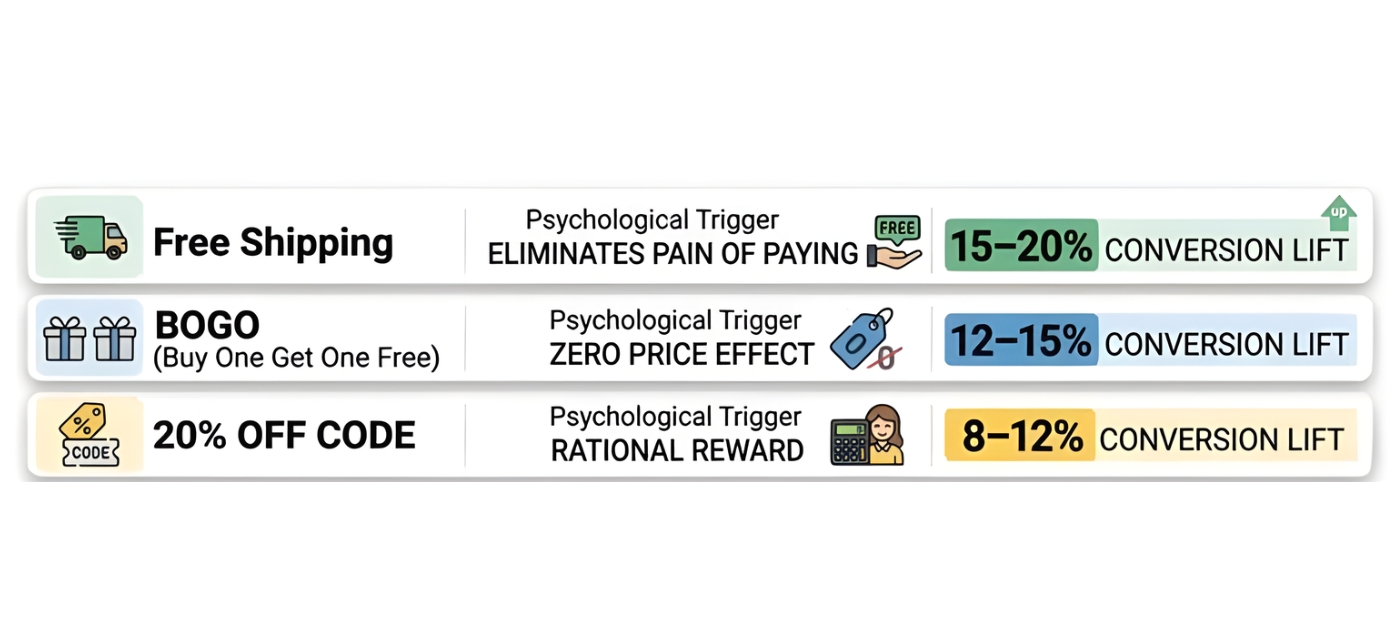
The primary reason free shipping is such a massive motivator is that it eliminates transactional friction. A customer might mentally commit to a $50 pair of shoes, but if the checkout page suddenly jumps to $58.50, it triggers a "pain of paying" response. Staying updated on e-commerce free shipping trends is vital for brands because those that ignore this "perk" often see their bounce rates skyrocket.
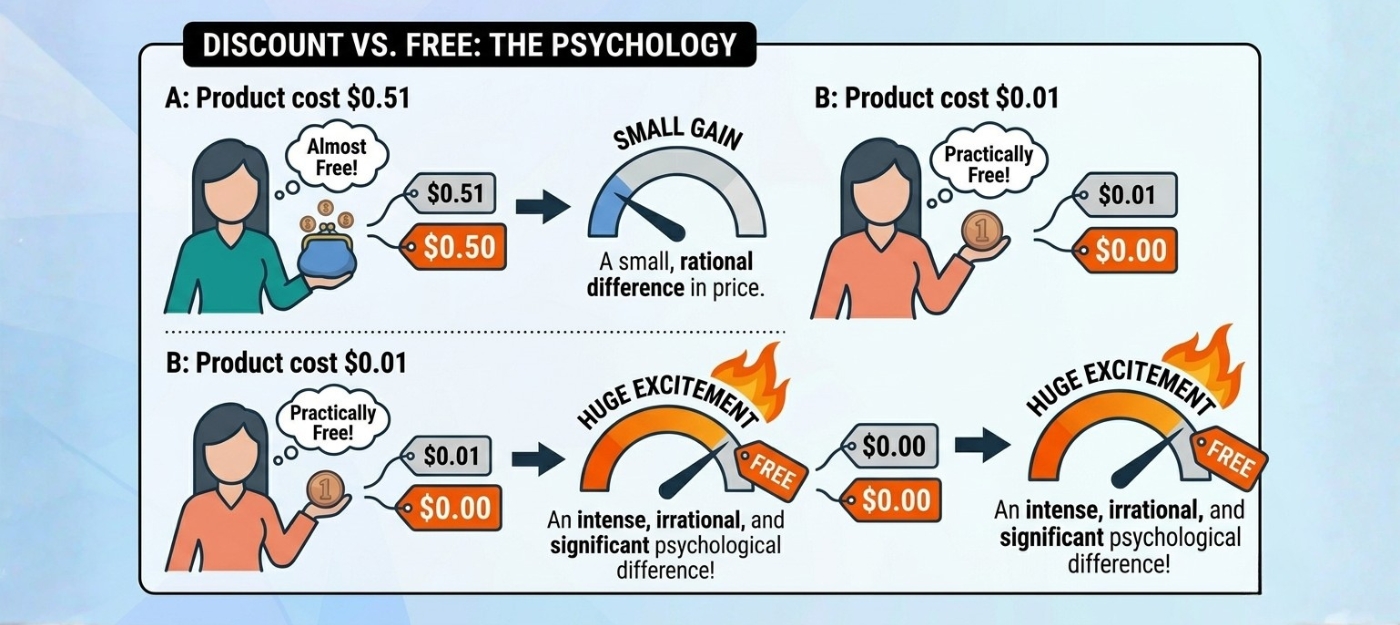
To grasp the reason for this dominance of "free" over "discounted" in all tests, we use the Zero Price Effect, a term coined by Dan Ariely himself. The study revealed that the price difference between $0.01 and $0.00 is far more significant than the difference between $0.51 and $0.50. When the cost is zero, the perceived risk of the transaction is deleted.
The free shipping benefits for consumers go beyond the wallet; it’s about a "hassle-free" mental state. When an item is free, we stop searching for flaws. The logic is simple: "I have nothing to lose." This is the reason a "Free Shipping" deal consistently beats a "20% Off" coupon in A/B tests, even if the coupon saved the customer more money.
For the savvy consumer, the key to a guilt-free shopping spree is in finding these deals. If you are looking to avoid delivery costs altogether, you can find a curated list of the best free shipping offers from top brands. Utilizing these dedicated resources ensures you never have to hit that "hidden penalty" at checkout again.
You might wonder how discounts affect buying decisions. It's not just about the numbers; it's about the chemicals in the brain that get released when we get a deal. We get a "win" against the store when we get a discount.
Prices serve as a signal for value. Higher prices equate to luxury, and a sudden drop in price equates to an "opportunity" that we cannot pass up. Effective discount and coupon strategies that drive more sales for a business identify the "sweet spot" for the customer to gain a strategic advantage.
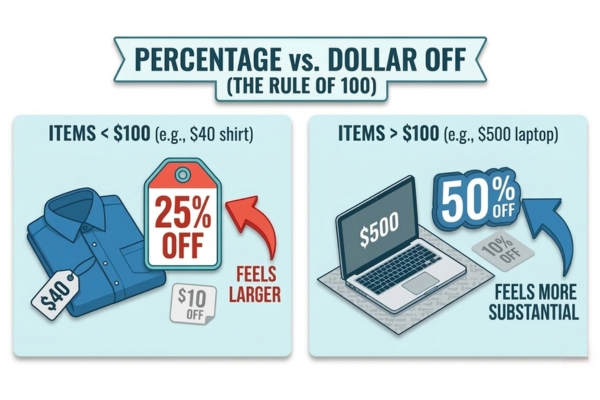
Understanding how pricing affects buying decisions is the difference between a stagnant inventory and a sold-out launch. This is particularly true for:
In the USA and UK, social proof marketing is a pillar of consumer decision-making factors. As tribal beings, we need the approval of the crowd to validate our decisions.
FOMO in marketing (Fear of Missing Out) is one of the most intense impulse buying triggers. When a site says "Only 2 left!" or "Sale ends in 1 hour," it triggers a biological "fight or flight" response. This limited-time offers psychological effect that stops the brain from overthinking and starts the hands clicking "buy."
In the ocean of online storefronts, the biggest challenge for an online shopper isn’t finding a product, but it’s choosing one. This is where personalized recommendations for e-commerce come in as the ultimate “invisible salesman."
By utilizing AI to analyze your past consumer buying behavior, brands create a shopping experience that’s as if you are there. When an online storefront includes "Recommended for You," it’s not just a marketing gimmick; it’s a move to alleviate "choice paralysis."
When given too many options, the human brain goes into a state of shock and "freezes," causing the shopper to abandon the shopping cart. However, by limiting the options to key factors in the consumer buying process, the experience becomes effortless, increasing the chances for an unplanned purchase by 49%.
This approach to e-commerce transforms a transactional experience into a curated one, utilizing psychological triggers in marketing to make the shopper feel understood. In doing so, the brand succeeds in making the experience effortless for the shopper and nudges them towards the checkout button.
One of the largest obstacles to overcome in consumer buying behavior is the fear of making a wrong purchase. "What if it doesn't fit?" "What if the color is wrong?" These are the types of thoughts that will stop a purchase dead in its tracks, more than even the price. To combat this, elite retailers offer robust safety nets.
When a brand provides a clear path for free returns and exchanges, it effectively removes the final barrier to purchase. By guaranteeing a risk-free experience, brands build long-term loyalty and ensure that the "Zero Price Effect" extends even to the post-purchase experience.
Reciprocity marketing tactics rely on our human need to give back when we receive. If they offer me a free sample, I feel like I owe them one and should "repay" them with my business.
Another thing to note is the new personalized e-commerce recommendations. By showing "items you might like," brands reduce "choice paralysis." When the decision feels tailor-made for us, we see a 49% increase in unplanned purchases.
Last but not least, we need to be aware of the "anchoring effect" when it comes to prices. "Original Price": $500, "Sale Price": $199. The $500 makes the $199 seem like a steal, even for something that may not have that much production value to begin with.
At their core, reciprocity marketing strategies are based upon a fundamental human drive to reciprocate when we have benefited. In the world of e-commerce, this "gift" might be a free style guide, a coupon, or a deluxe sample. When we provide something of value for free, we create a type of "social debt." This means that the consumer feels a type of inner pressure to "repay" this action.
This is the core of the discounts and consumer psychology. This is also the core of "Free Gift with Purchase" marketing strategies. This type of marketing works because a gift feels like a personal gesture, whereas a discount feels like a math problem. In addition to this, this type of marketing often utilizes the limited-time-offer psychology.
This means that the consumer feels compelled to purchase in response to this inner pressure. By utilizing this type of marketing, we are creating a foundation of trust that has a significant impact on how we feel about pricing. We become the default choice when we are ready to make a purchase.
The intersection of free-shipping psychology and psychological triggers in marketing shows that we are rarely the rational shoppers we think we are. Brands invest millions into understanding our subconscious, from the anchoring effect in pricing to the simple, powerful allure of the word "free."
The next time you are ready, free shipping psychology and psychological triggers in marketing show, so check out, stop, and think for a second about what is going on. Are you really needing the product, or is it because the discounts and consumer psychology are just too good to pass up?